
How AI Is Transforming Tour Operations for Sri Lankan DMCs
AI is already practical for Sri Lankan tour operators: it drafts bookings from agent emails, fills costings from a description, reads hotel rate PDFs and answers questions about your own bookings in plain English.
Travify Team
Travel Operations Experts · April 13, 2026 · Updated October 6, 2026
In short: AI is transforming tour operations by removing transcription and lookup work, not by replacing travel designers. In 2026 a Sri Lankan DMC can turn an agent email into a booking draft, fill a costing from a typed or dictated description, extract contracted rates from hotel PDFs, and ask an in-app assistant about its own bookings in plain English. Prices, margins and judgement stay with people.
When most Sri Lankan tour operators hear "artificial intelligence", they picture chatbots that misunderstand simple questions. The reality in 2026 is more practical. AI now solves the everyday problems of an inbound tour operator (a company that designs and runs holidays in its own country for overseas travel agents and their clients): finding booking details, re-keying enquiry emails, turning a described holiday into a costing, and reading contracted rates out of hotel PDFs.
Sri Lanka welcomed 2.36 million tourist arrivals in 2025, and the government is targeting 3 million for 2026. As volumes grow, so does operational load. A DMC (destination management company, the inbound operator that agents abroad book through) handling 150 bookings a month cannot run on the email searches, spreadsheet scrolling and copy-pasting that worked at 50.
Key takeaways
- The biggest AI win for a DMC is at data entry: agent emails, trip descriptions and hotel rate sheets become structured drafts instead of being re-keyed by hand.
- An in-app assistant such as Travify's Jarvis answers questions about your own bookings, vouchers, agents and suppliers in plain English, so staff stop opening records one by one.
- AI should fill inputs only; every rate, markup, VAT figure and total must still run through the system's normal pricing calculations.
- Extracting contracted hotel rates and cancellation terms once from the PDF, then picking them inside the costing, removes the most error-prone lookup in the office.
- AI does not negotiate rates, design complex itineraries or manage agent relationships; it hands those hours back to the people who do.
Why do manual lookups eat so much of a DMC's day?
Manual lookups eat the day because every question about a booking requires a person to stop, open the right record, read it and type a reply. Consider an operations manager at a mid-sized Sri Lankan DMC. A travel agent asks whether the hotel vouchers are confirmed for a family arriving next Tuesday. The manager opens the booking, finds the voucher section, checks the status and replies. That is several minutes for one question.
Multiply that across a day. The owner wants this month's confirmed bookings. A designer needs the costing breakdown to settle a supplier dispute. An agent asks for the value of their confirmed bookings this quarter. Finance wants to know which settlements are still open. Each request interrupts someone's real work.
- Finding one booking among hundreds means remembering a reference number or scrolling through lists
- Answering "how many bookings did we get this month?" means counting by hand or configuring a report
- Checking voucher status across several bookings means opening each one individually
- Comparing this month with last month means pulling two periods of data and doing the arithmetic yourself
- Judging travel agent performance means aggregating bookings across many records with no quick way to query them
A large share of an operations team's working hours goes on information retrieval: finding, assembling and communicating data that already exists in the system. AI assistants are designed to remove exactly this category of work.
What is an AI operations assistant, and what can you ask it?
An AI operations assistant is an in-app assistant that answers questions about your own bookings and operations in natural language, instead of making you navigate to screens or export data. It is the most useful AI application for tour operators in 2026: not a recommendation engine or a customer-facing chatbot, but a colleague who can see every booking, hotel, agent and voucher in your system.
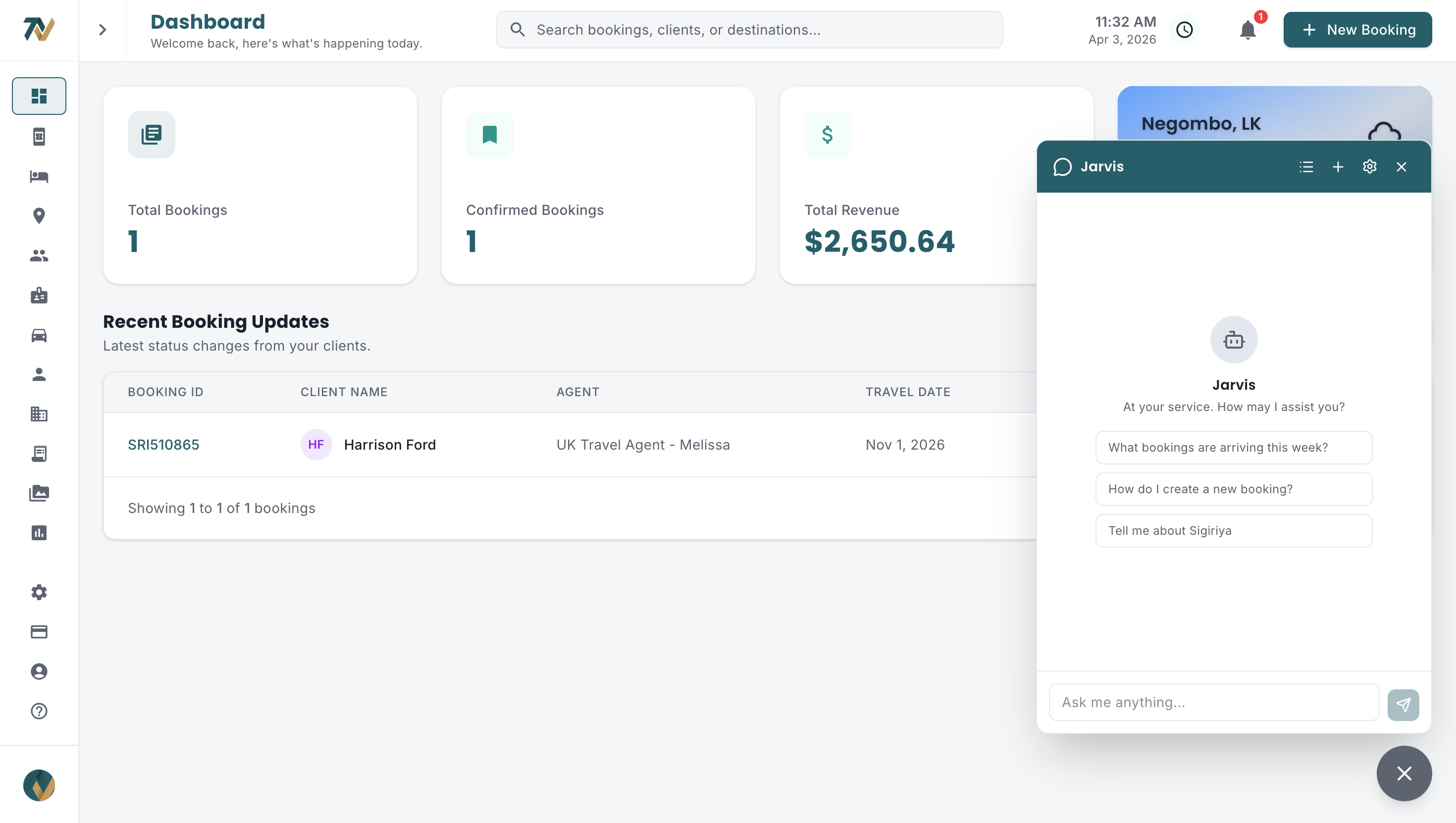
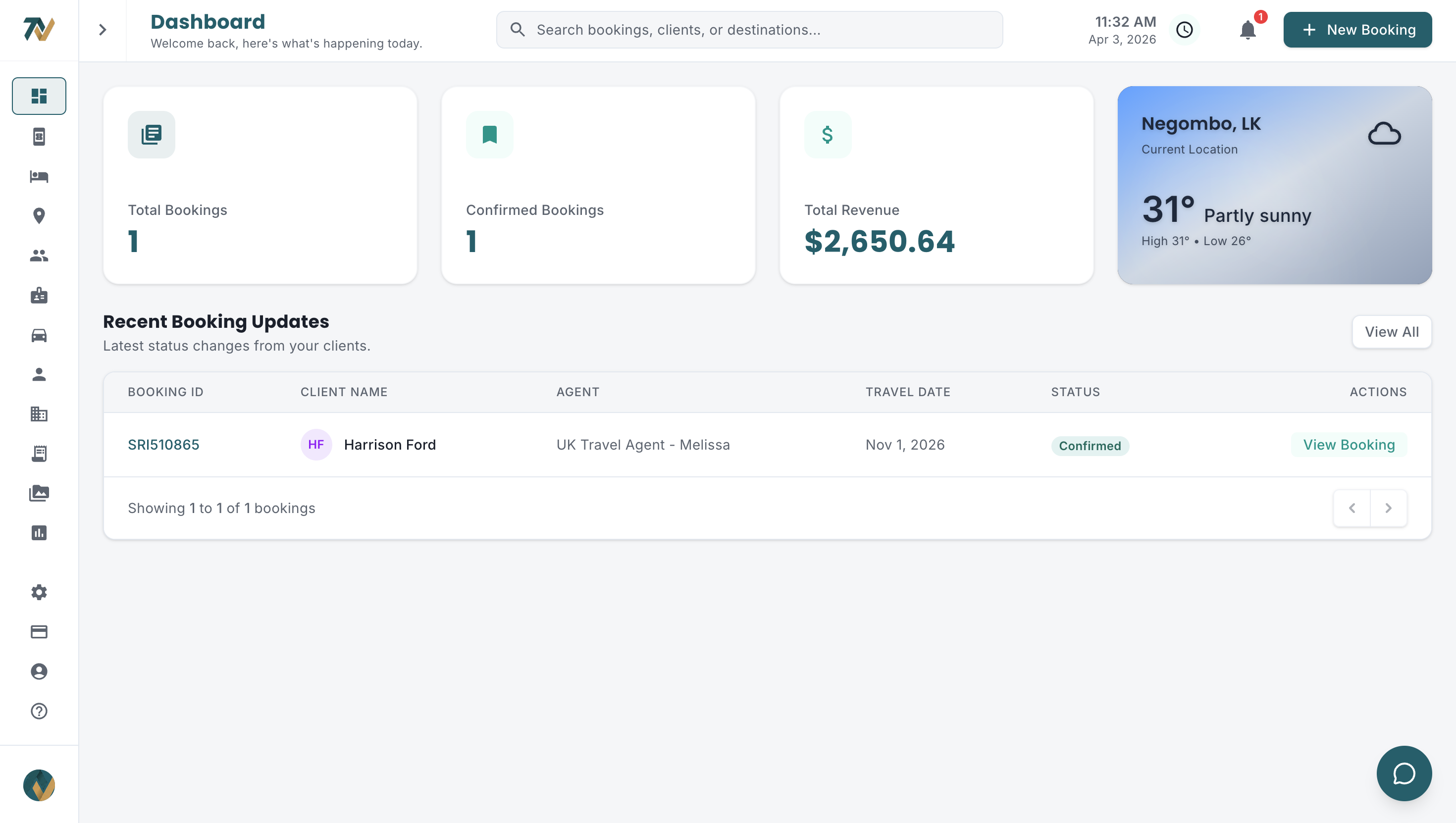
Travify's assistant, Jarvis, works this way. It is backed by more than twenty purpose-built lookups that search and read your company's data, so a question such as "which bookings arrive next week?" is answered from your bookings, not from the internet. There is no query syntax to learn, and every answer is scoped to your own company's records.
What can you ask Jarvis?
You can ask Jarvis anything that lives in your booking files, directory and documents. Typical questions:
| Question type | Example question | What Jarvis does |
|---|---|---|
| Booking search | "Show me all bookings arriving next week" | Searches your bookings by arrival date and lists each one with travelers, agent and status |
| Pipeline value | "What is the total value of pending inquiries?" | Filters bookings by inquiry status and adds up their selling prices |
| Voucher tracking | "List confirmed bookings with hotel vouchers still unconfirmed" | Cross-checks booking status against the confirmation tick on each hotel voucher |
| Conversion | "How many inquiries became confirmed bookings this month?" | Reads this month's bookings and reports how many moved from inquiry to confirmed |
| Agent performance | "Which travel agents sent the most bookings this quarter?" | Groups bookings by travel agent and ranks them by count and value |
| Supplier lookup | "Show me our registered hotels in Kandy" | Searches your hotel directory by location and lists matching properties |
| Booking details | "Give me the full details for the booking arriving on 14 December" | Opens that booking file and summarises travelers, rooms, flights, payments and special requests |
| Business overview | "How is the business doing compared to last month?" | Compares bookings and values across the two months and summarises the trend |
Jarvis keeps the thread of a conversation, so follow-ups build on the previous answer: "Show me bookings arriving next week", then "Which of those still need hotel vouchers?", then "Show me the Change Log for the second one." You never have to repeat yourself.
What data can Jarvis read?
Jarvis reads your own operational records, not generic web content. Its lookups cover:
- Bookings: search by date range, status, agent or free text, plus full booking details, upcoming arrivals and the append-only Change Log of who changed what and when
- Documents: hotel and supplier vouchers, invoices and payment status, itineraries, transport documents (guide itinerary, tour advance sheet, technical visits) and traveler information forms
- Costings: the cost breakdown for a booking across accommodation, transport, guides, activities and markup
- Directory: hotels with seasonal rates, guides, suppliers, travel agents with booking history, customers, vehicles with seat counts and mileage rates, and the expense catalog
- History: past itineraries day by day and how hotels have actually been used across bookings, which is also the basis for itinerary suggestions grounded in your own work
- Company view: high-level booking and performance metrics for a quick business overview
Each lookup is purpose-built for tour operations. This is not a generic business chatbot bolted onto a travel platform; it understands the records, statuses and documents a DMC team deals with daily.
How does AI remove data entry from bookings, costings and rate sheets?
AI removes data entry by turning unstructured input (an email, a spoken description, a rate PDF) into a structured draft that a person reviews. Most of a travel designer's day is transcription: reading an agent's email and re-keying it into a booking form, turning a trip conversation into a costing, copying rates out of a hotel PDF. None of it is judgement work, and all of it is slow.
Enquiry email to booking draft
An agent's enquiry arrives as prose: traveler names buried in a paragraph, dates written three ways, room needs mentioned in passing. On Travify's New Booking form you paste that email, or upload the PDF or image the agent attached, and AI extracts a structured draft: travelers, dates, tour, rooms, flights and special requests.
Details that fit no field land in the booking's Other Information field (Step 4 of the form) rather than being dropped, and filled fields are highlighted so you review rather than trust blindly. For a DMC competing on response time, this is the first step in fixing slow agent replies.
Describe or dictate a holiday and get a costing draft
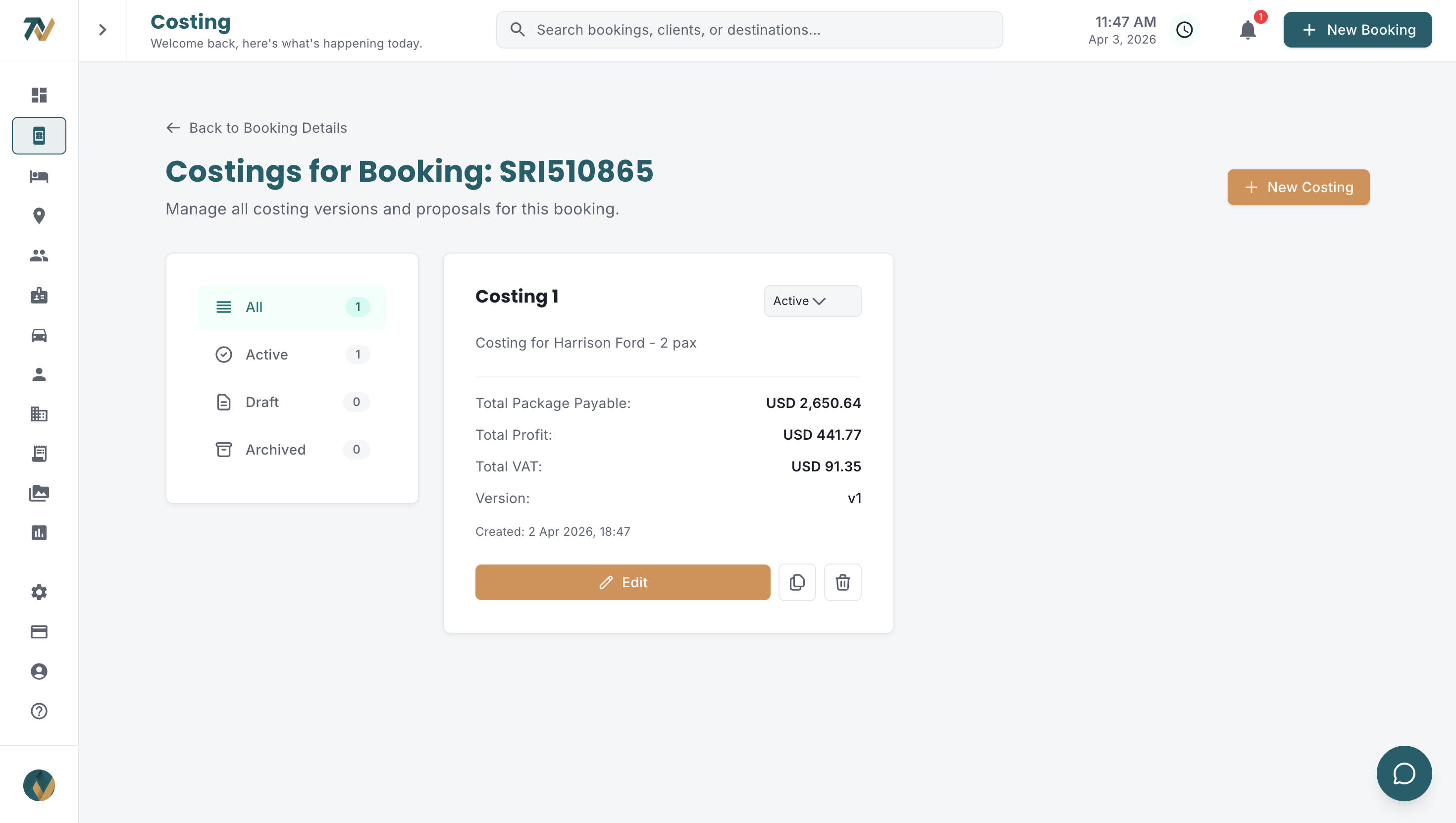
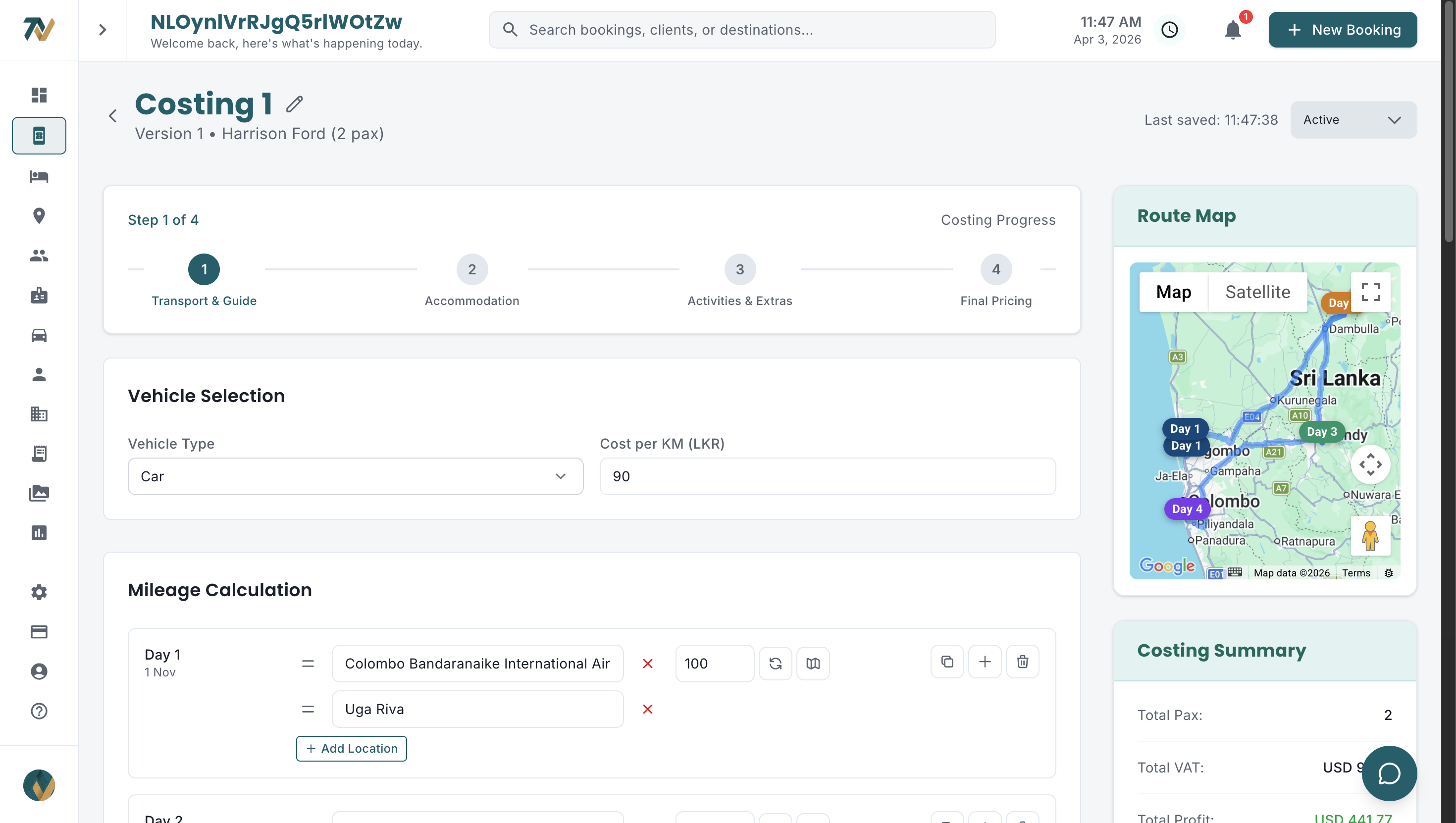
In the costing editor, AI auto-fill lets a designer type the trip in plain language, dictate it out loud between phone calls, or build the draft in one click from the booking itself. AI then fills the transport legs, guides, hotels, activities and other expenses as a draft to review. If you still build quotes in spreadsheets, this is the step Excel cannot do.
One design decision matters more than the feature itself: AI fills inputs only. Every rate, markup percentage, VAT figure and total still runs through Travify's normal calculations. The AI decides what goes into the costing, never what it costs. That boundary is what makes it safe to use on commercial documents.
The same step offers a sample itinerary, drafted day by day from your company's own past costings rather than a generic template. The suggestions look like your trips because they are built from your trips.
Hotel rate documents, read for you
Contracted rates arrive as PDFs, spreadsheets, photographed pages and pasted emails, and have historically been re-typed by hand into whatever system a DMC uses. Upload them to a hotel's Rate Document Library instead and AI extracts seasonal rates by date range, occupancy prices, meal plans, policies and cancellation terms. The hotel rate management chaos most DMCs live with starts with that re-typing.
Those saved rates are then picked straight from the library inside the costing's Accommodation section, ranked by how well they match the booking: the travel date falling inside the rate's season, plus meal plan, room category and occupancy. The same rate picker can show an AI-read cancellation deadline for the stay (the free-cancellation cutoff, whether the rate is non-refundable and the tiered penalty schedule), so the terms sit next to the price instead of inside a PDF nobody reopens, which is exactly the detail that gets missed in the December to March peak.
Can AI write activity descriptions and itinerary content?
Yes. AI can draft activity descriptions, hotel summaries and itinerary day narratives, and tone guidelines you configure keep them in your company's voice. Every DMC has written "Visit the sacred Temple of the Tooth Relic in Kandy" a hundred different ways, and every new itinerary needs it again.
Travify's itinerary builder draws on a company knowledge base where you set tone and voice guidelines for activity cards, hotel cards and the itinerary header description. The output sounds like your company wrote it because the instructions came from your company. Use it for:
- Activity descriptions for a day's sights that match your brand tone
- Hotel summaries for the properties on an itinerary
- Itinerary overviews and day narratives that stay consistent across every client document
- Refining rough text you paste in, with an instruction such as "shorter and warmer"
The quality of AI-written content tracks the quality of your knowledge base. Spend an afternoon writing tone guidelines and detailed notes for your most-used hotels and activities. After that, drafts arrive in seconds and need only a light edit.
What does a day with AI-assisted operations look like?
A day with AI assistance replaces a chain of lookups and re-typing with a handful of questions and reviews. Here is an illustrative day for an operations manager at a Sri Lankan DMC in high season:
- 8:30 AM, morning briefing: ask Jarvis "What bookings arrive this week and which hotel vouchers are still unconfirmed?" and get one overview instead of opening each booking.
- 9:15 AM, agent question: a partner agent asks about their bookings this quarter. Ask Jarvis for that agent's booking count and total value and reply within minutes.
- 10:00 AM, new enquiry: paste the agent's email into the New Booking form, review the highlighted draft, and build the first costing from the booking in one click.
- 11:30 AM, owner check-in: ask Jarvis "How are we tracking against last month on bookings and value?" and pass on a data-backed answer.
- 2:00 PM, supplier dispute: a hotel says it never received a voucher. Ask Jarvis for that booking's hotel vouchers, which carry their sent dates, and its Change Log, which records when each voucher was generated and emailed and to whom, instead of digging through sent emails.
- 3:30 PM, finance review: ask which settlements are still open and which hotel vouchers remain unconfirmed, ahead of the weekly finance meeting.
- 4:45 PM, end-of-day check: ask for bookings arriving in the next 48 hours that still have no Active costing, so nothing slips through.
Each interaction takes moments rather than minutes. Across a day the savings compound into hours that go back to agent relationships, better itinerary design and growing the business.
What will AI not do for a tour operator?
AI will not negotiate rates, design a complex itinerary from scratch, or manage the relationships that bring agents back. It is a tool for mechanical work, not a replacement for judgement. Here is the split:
| Area | What AI does well | What people still do |
|---|---|---|
| Data | Retrieves and presents data from your own systems instantly | Decides what the numbers mean for the business |
| Content | Produces first drafts of descriptions and itinerary text | Makes judgement calls on complex itinerary design |
| Questions | Answers factual questions about bookings and performance | Negotiates rates and handles sensitive supplier situations |
| Patterns | Spots patterns and trends in booking data | Understands the nuanced preferences of specific travelers |
| Repetition | Automates repetitive calculations and lookups | Builds the personal relationships that differentiate a DMC |
The most effective DMCs are not choosing between AI and human expertise. They use AI for the mechanical, repetitive work so the team can focus on what differentiates the business: relationships, creative itinerary design and commercial decisions.
Think of AI as a force multiplier. A small team with AI assistance can carry a noticeably larger booking load without working longer hours, which is the difference between growing through peak season and burning out in it. The goal is not fewer people; it is more bookings per person. See scaling your tour operation for the wider playbook.
How does Travify put AI into everyday DMC work?
Travify builds AI into the points where a Sri Lankan DMC's time actually goes: the booking form, the costing editor, the rate library and the questions staff ask all day. Every AI feature produces a draft a person reviews; none of them changes a price on its own.
- Email to booking: paste an agent email or upload a PDF or image on the New Booking form, then review a highlighted draft with travelers, dates, tour, rooms, flights and requests.
- Costing auto-fill: describe or dictate the holiday, or build the draft in one click from the booking; transport legs with automatic mileage, hotels, guides, activities and other expenses are filled, and markup and VAT run as normal.
- Sample itinerary: AI drafts a day-by-day route from your company's past costings, which then becomes the branded itinerary with hotels, activities and photos.
- Rate Document Library: upload contracts, rate sheets and offers; AI extracts seasonal rates, occupancy prices, meal plans, policies and cancellation terms, and the rates are picked inside the costing.
- Directory imports: travel agents, suppliers, guides, vehicles and the expense catalog are extracted from a spreadsheet, PDF or image for review instead of being typed in.
- Finance terms: AI reads a hotel's rate document or a supplier's terms into deposit, balance and credit-day proposals that a Finance manager must confirm.
- Jarvis: an in-app assistant that answers questions about your own bookings, vouchers, agents, suppliers and operations in plain English.
Plans run from Solo at $24 per month (2 users) to Enterprise from $1,200 (30 users), and every plan starts with a free trial. See Travify pricing and the full list of modules for what each department gets.
How should a Sri Lankan DMC start with AI?
Start with the highest-volume transcription task, not the most impressive demo. Adopting AI needs no technical background or large investment; it needs one workflow changed at a time. For most Sri Lankan DMCs the order looks like this:
- Start with data retrieval: ask an assistant such as Jarvis about bookings, vouchers and agents. There is no learning curve, so the value is immediate.
- Cut the typing at the front door: paste agent enquiry emails into the New Booking form and describe holidays into costing auto-fill. These are the two highest-volume transcription tasks in most DMCs, so they pay back fastest.
- Feed it your rate documents: upload hotel contracts and rate sheets once, before the December to March peak, so nobody reads the same PDF on every costing.
- Move to content: write tone guidelines in your knowledge base, then let AI draft activity descriptions and itinerary text for review.
- Expand to analysis: ask the questions you never had time for. Which markets are most profitable, which agents convert best, which months are busiest. The reports every DMC should read monthly give the structured view.
- Make it routine: morning briefing, voucher status check, end-of-day review. The more the team uses it, the more hours it returns.
Why does moving early matter?
AI adoption among Sri Lankan tour operators is still early. Most DMCs run on manual processes, spreadsheets and basic booking systems, so operators adopting AI tools now gain faster response times, better insight and more consistent content while competitors are still re-typing emails.
That window will close. As AI becomes mainstream it shifts from advantage to baseline expectation, much as a website once did. The DMCs that move early will have months of knowledge-base content, refined workflows and team familiarity by the time competitors start.
Experience AI-powered tour operations
See how Jarvis, costing auto-fill, email-to-booking extraction and AI rate-document reading change your daily operations. Start your free trial and ask your first question in minutes.
Start your free trialarrow_forwardFrequently asked questions
Ready to Streamline Your Operations?
Join Sri Lankan travel companies already saving hours every week with Travify.
Related Articles
DMC Software Comparison 2026: What Sri Lankan DMCs Need
Most tour operator software was built for Western agencies. What Sri Lankan DMCs actually need in 2026, how generic tools, purpose-built software and spreadsheets compare, and what each really costs.
Hotel Rate Management for Sri Lankan DMCs: Fix the Chaos
If your hotel rates live in email inboxes, PDF attachments and WhatsApp threads, you are almost certainly quoting wrong prices. Here is how Sri Lankan DMCs centralise seasonal rates and stop the margin leak.
Excel Is Killing Your Tour Costing: Why DMCs Need Software
Excel was never designed for tour costing. Sri Lankan DMCs lose margin to silent formula errors, waste hours hunting rates and risk bookings on version confusion. Here is what dedicated costing software does differently.