
B2B Travel Agent Management for Sri Lankan DMCs
India sent about 531,000 visitors to Sri Lanka in 2025 and the UK grew 24.9%. Behind those arrivals are travel agents. Here is how a DMC tracks, pays and keeps them.
Travify Team
Travel Operations Experts · April 13, 2026 · Updated October 6, 2026
In short: B2B agent management is how a Sri Lankan DMC tracks, serves and pays the overseas travel agents who send it clients. It works when every agent has one record (contacts, commission terms, booking history), performance is measured per agent and per market, commission is fixed on each costing, and every booking carries its agent so communication and settlement stay traceable.
Sri Lanka does not sell itself to international tourists; travel agents do. A destination management company (DMC) is the inbound tour operator that builds and runs the tour on the ground. A B2B travel agent is the overseas tour operator, agency or wholesaler that sells that tour to the end traveler, which makes the agent the DMC's real customer. Most Sri Lankan DMCs still manage these partners through email threads, WhatsApp groups and spreadsheets nobody updates.
The stakes show in the arrivals data. India was Sri Lanka's largest source market in 2025 with about 531,000 visitors, roughly 27% of arrivals, and the United Kingdom grew 24.9%. Germany, China and Russia completed the top five. Behind each number is a network of agents who chose Sri Lanka over the Maldives or Thailand; keeping them loyal is existential.
Key takeaways
- A B2B travel agent is the DMC's customer, not the traveler: keep one record per agent with contacts, commission terms and booking history.
- Track bookings, revenue, average booking value, conversion rate and last activity date per agent and per period, so a declining partner is spotted early.
- Record commission where the quote is priced; in Travify the agent commission is set per costing and carried into the settlement as an "Agent commission" line, so settlement uses the figure that was quoted.
- Give every source market an owner; Travify markets limit non-manager designers to their own regions and can number bookings per market.
- Fast replies, error-free quotes, prompt vouchers and on-time commission payments keep agents loyal; they need a system, not heroics.
What does poor agent management cost a Sri Lankan DMC?
Informal agent management costs a DMC lost bookings, commission errors and relationship knowledge that leaves with staff. The problems stay invisible until they compound: a high-value UK agent has not booked in three months and nobody noticed, or a departing designer takes every agent contact with them.
- Revenue concentration risk: you do not know that most of your revenue comes from a handful of agents until one moves to a competitor.
- Commission leakage: untracked terms mean you either overpay, which hurts margin, or underpay, which hurts the relationship.
- Slow replies: when agent details are scattered, every new inquiry starts with a hunt for the agent's history and rates. Slow agent replies lose bookings long before anyone notices a pattern.
- No benchmarking: you cannot reward your best agents or spot underperformers if nothing is measured.
- Knowledge loss: when staff rotate, undocumented agent relationships go with them.
What should a DMC's travel agent record contain?
An agent record should hold the agent's type, contacts, agent code, commission terms, booking history and performance figures in one searchable place. A generic CRM such as Salesforce or HubSpot is built for sales pipelines, not the DMC-to-agent model; an inbound tour operator needs a record shaped around the data points below.
| Agent data point | Why it matters | Where it usually lives today |
|---|---|---|
| Agent type (individual / company) | Sets communication style and commercial terms | In someone's head |
| Contact details (email, phone, address) | Reachability and voucher delivery | Phone contacts / WhatsApp |
| Commission terms | Accurate quoting and settlement | An email chain from 2023 |
| Agent code | Quick identification on bookings and reports | Maybe a spreadsheet |
| Booking history | Understanding value and patterns | Scattered across files |
| Performance metrics | Strategic relationship decisions | Does not exist |
With one record per agent, you open a caller's profile in seconds and see commission terms, total bookings, revenue and last activity date. You know who you are talking to and what the relationship is worth.
Which travel agent performance metrics should a DMC track?
Track bookings, revenue, average booking value, conversion rate, guest ratings, last activity date and commission paid, per agent and per period. Agents do not stay equal: a partner who sent 50 bookings last year may send 20 this year because a competitor replied faster, and without tracking you find out only when revenue is already down.
- Total bookings (all time and per period): the raw volume an agent sends you.
- Total revenue: more telling than booking count because it reflects value, not just quantity.
- Average booking value: separates agents who send luxury bookings from those who send budget travelers.
- Conversion rate: the share of an agent's inquiries that become confirmed bookings; a low rate can mean your pricing is off for their market.
- Average guest rating: consistently lower ratings suggest the agent is setting the wrong expectations when selling.
- Last activity date: an early-warning signal when a previously active agent goes quiet.
- Commission paid: a running total so settlement is accurate and disputes are rare.
Group agents into Gold, Silver and Bronze tiers by revenue and volume. Gold agents get priority response times, first access to limited hotel allotments in the December to March peak, and quarterly business reviews. Tiers replace informal favouritism with something fair and transparent.
How do you compare and rank agents each quarter?
Each quarter a DMC should be able to say, without manual calculation, which agent generated the most revenue, which converts the most inquiries into confirmed bookings, which agents are growing or declining year on year, and how average booking value compares across markets.
| Agent (illustrative) | Market | Bookings (Q1) | Revenue (USD) | Avg. guest rating | Trend vs last year |
|---|---|---|---|---|---|
| Agent A, Mumbai | India | 34 | $48,200 | 4.3 | Up 15% |
| Agent B, London | UK | 12 | $67,500 | 4.8 | Up 24% |
| Agent C, Berlin | Germany | 18 | $41,000 | 4.5 | Flat |
| Agent D, Delhi | India | 28 | $31,400 | 4.1 | Down 10% |
This table is an illustrative example, not real data. In it the London agent produces the most revenue from the fewest bookings, typical of the UK market, while the Delhi agent is declining and due a check-in. A reports dashboard that answers these questions turns agent management from reactive to strategic.
How do you manage travel agent commissions without disputes?
Store each agent's commission terms once, apply them where the quote is priced, and settle from the same figure. Commission structures are rarely simple; illustrative examples: 10% on accommodation and 5% on transport for one agent, a flat 8% on the package for another, a tiered rate above an annual revenue threshold for a third. Tracked in spreadsheets, errors are a certainty.
Settlement is the reconciliation of a finished tour's revenue against its actual costs and payments, and commission is where it most often goes wrong. If the commission is fixed at the moment of costing, the settlement already holds the right number. The settlement and profit tracking guide covers the full close-out.
In Travify, each agent's commission structure (a percentage or a fixed USD amount, with an optional minimum booking amount) is kept on the agent's profile, and a new costing for that agent's booking starts with it. The commission sits on the costing next to the markup, VAT and LKR to USD rate that produce the USD selling price, so it is recorded with the quote itself rather than in a separate sheet, and the settings are frozen there: a later change to the agent's profile never moves a quoted price. Once the booking is confirmed, Finance sees the commission as a payable to the agent and as an "Agent commission" line in the settlement, and the Financial reports break margin down by market, agent and designer.
Who on your team owns each source market?
Commission answers what an agent is owed; the harder question as the partner list grows is who on your team owns each relationship. An agent in Frankfurt and one in Mumbai want different itineraries, travel in different seasons and expect different turnaround; a designer who handles both well is rare.
Travify handles this with markets: six built-in sales regions (Europe, Australia, English, Middle East, South Asia and United States) plus custom regions your company defines. Every booking carries a market and Travels team members are assigned the markets they cover. A non-manager designer sees and edits only bookings in their own markets, managers and admins see everything, and each market can number its bookings with its own prefix. Agent relationships stop being informally owned: when an agent emails, it is clear whose reply it is.
How do Indian and UK travel agents differ in what they expect?
Indian agents typically want fast quotes and competitive pricing at volume; UK agents typically send higher-value bookings with longer lead times and want detailed itineraries and dependable service. India's roughly 531,000 arrivals in 2025 came through large online travel agencies, mid-sized operators in Mumbai, Delhi, Chennai and Bengaluru, and small niche agencies focused on honeymoons or pilgrimage travel.
Indian agents tend to operate on thinner margins, so a DMC that answers within hours with a professional quote wins business over one that takes days. That speed only comes from having agent data, commission terms and costing templates organised in advance. UK agents, with the market growing 24.9%, value detailed itineraries, sustainability credentials and service over rock-bottom pricing. Tracking these differences lets you tailor each relationship.

How do you keep agent communication in one place?
Link every booking to its agent in one system and record every change there, so the history is traceable. The typical failure is fragmentation: the commission agreement is in an email from 2024, the latest itinerary change is on WhatsApp, and a phone call two days ago changed the room type but nobody wrote it down.
When the booking file is the single source of truth, changes are logged with timestamps against the booking rather than lost in chat history. When a dispute arises, and disputes always arise in peak season, you have a record of what was agreed, when and by whom. The same file is where vouchers, itineraries and invoices go out from your own connected mailbox, with send history kept.
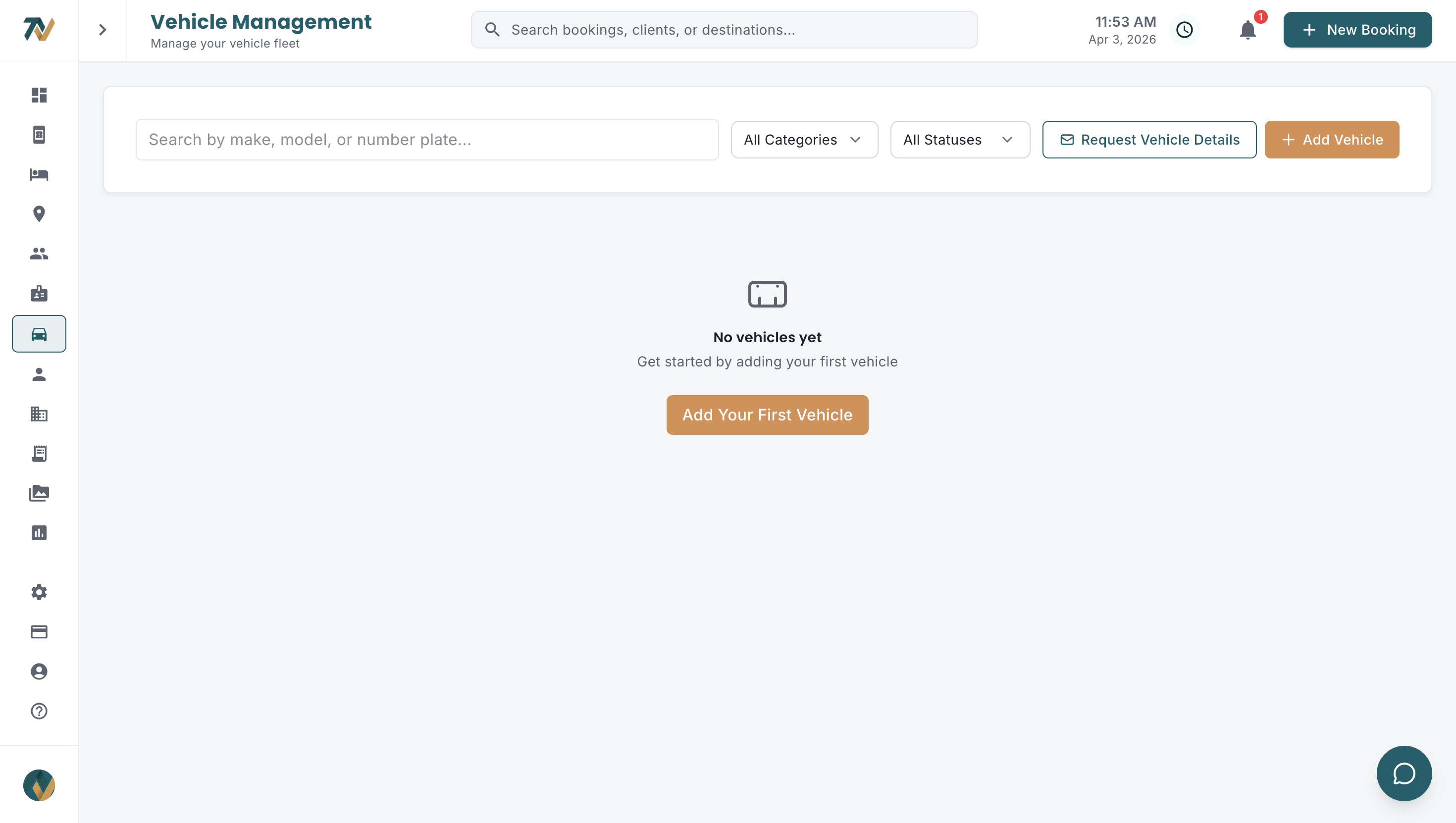
After a call or WhatsApp exchange that changes anything, spend 30 seconds updating the booking so the change is logged. The habit saves hours of dispute resolution and protects your team when staff rotate.
What keeps international travel agents loyal to a DMC?
Consistent execution keeps agents loyal: fast replies, accurate quotes, prompt vouchers and on-time commission payments, every time rather than occasionally. Sri Lanka is not the only destination agents sell. The DMCs that retain them do six things reliably:
- Respond to inquiries within hours, not days.
- Send professional, error-free quotes and itineraries.
- Deliver vouchers promptly so agents can forward them to clients.
- Settle commissions on time, every time.
- Share market insights, new products and seasonal promotions proactively.
- Handle complaints quickly and transparently.
None of these is extraordinary. The DMCs that deliver all six consistently through the December to March peak are rare, and agents notice. Peak-season chaos is usually where agent loyalty is won or lost.
How Travify manages travel agent relationships
Travify keeps the agent, the booking, the costing and the documents on one file, so agent management is a by-product of daily work rather than a separate spreadsheet. See the Travify solutions overview for the whole system; for agents, the parts that matter are:
- Agent directory: travel agents grouped by company with contacts and performance stats, plus an AI import of your existing agent list from a spreadsheet, PDF or image.
- One booking file per inquiry: agent, customer, travelers, dates, rooms, flights, payments and special requests, with an append-only Change Log and a status flow from inquiry to completed.
- Email to booking: paste the agent's email or upload a PDF on the New Booking form and AI drafts the booking, highlighted for you to check.
- Commission on the costing: the commission from the agent's profile seeds each new costing for that agent's booking and is frozen there; costs are in LKR and a per-costing rate produces the USD selling price the agent is quoted.
- Markets: non-manager designers see only their assigned regions, and each market can carry its own booking numbering.
- Documents from your own mailbox: a branded itinerary with a shareable link and view tracking, hotel vouchers, invoices and traveler forms, emailed from connected Gmail or Outlook.
- Money closed out: a settlement is created when a booking is marked Completed, receivables show paid and outstanding with aging, and Financial reports break margin down by market, agent and designer.
Plans start at $24 per month and every plan begins with a free trial; see Travify pricing for all tiers.
Manage your agent relationships properly
Travify links every travel agent to its bookings, costings, documents and settlement, with performance stats and commission set per costing. Start a free trial and bring your partner list into one place.
Start your free trialarrow_forwardFrequently asked questions
Ready to Streamline Your Operations?
Join Sri Lankan travel companies already saving hours every week with Travify.
Related Articles
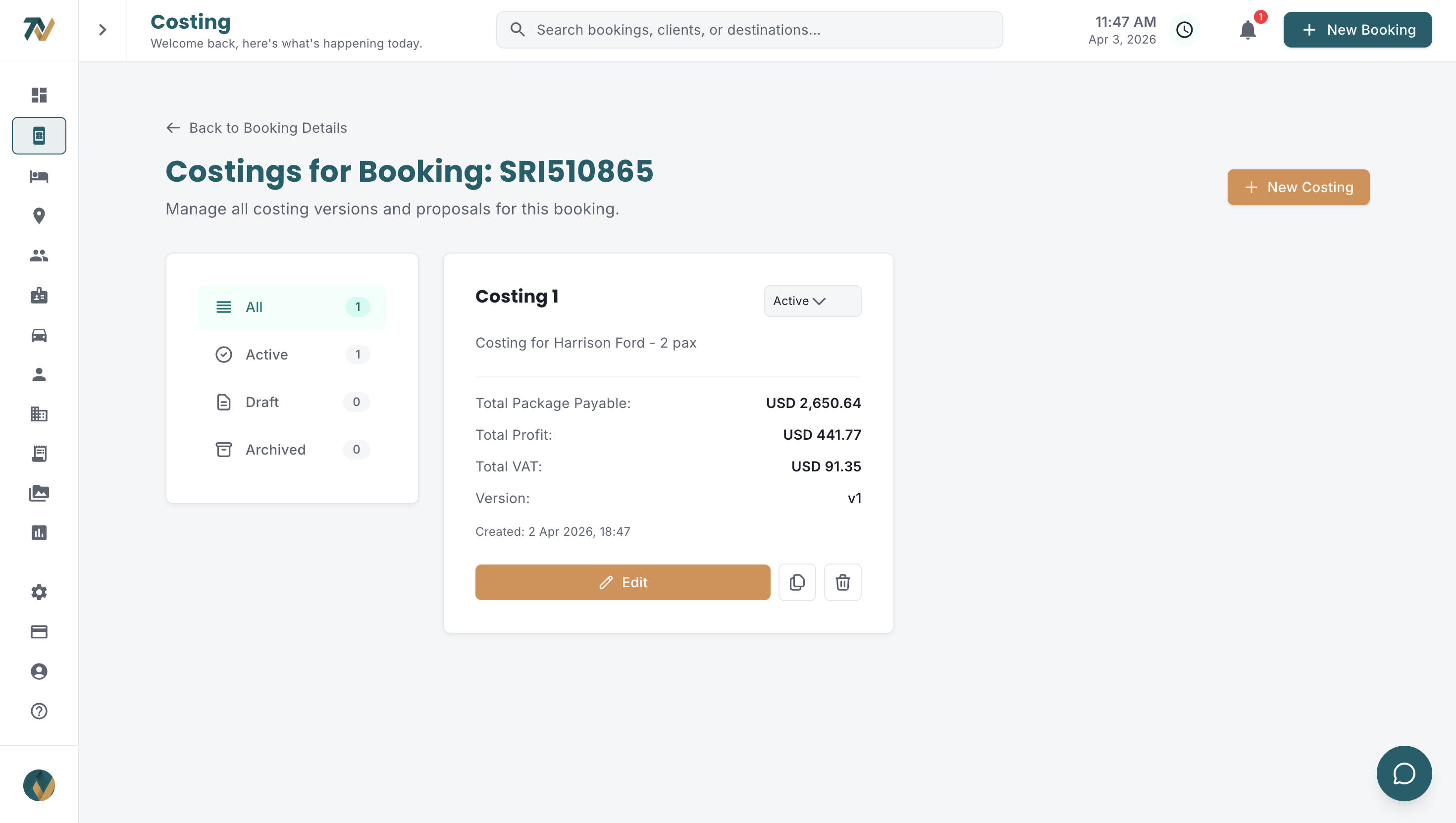
Why Sri Lankan DMCs Lose Bookings to Slow Agent Replies
Travel agents confirm with the first accurate quotation they receive, yet most Sri Lankan DMCs still take two to three hours to reply. Here is why speed decides the booking and how to cut turnaround to minutes.
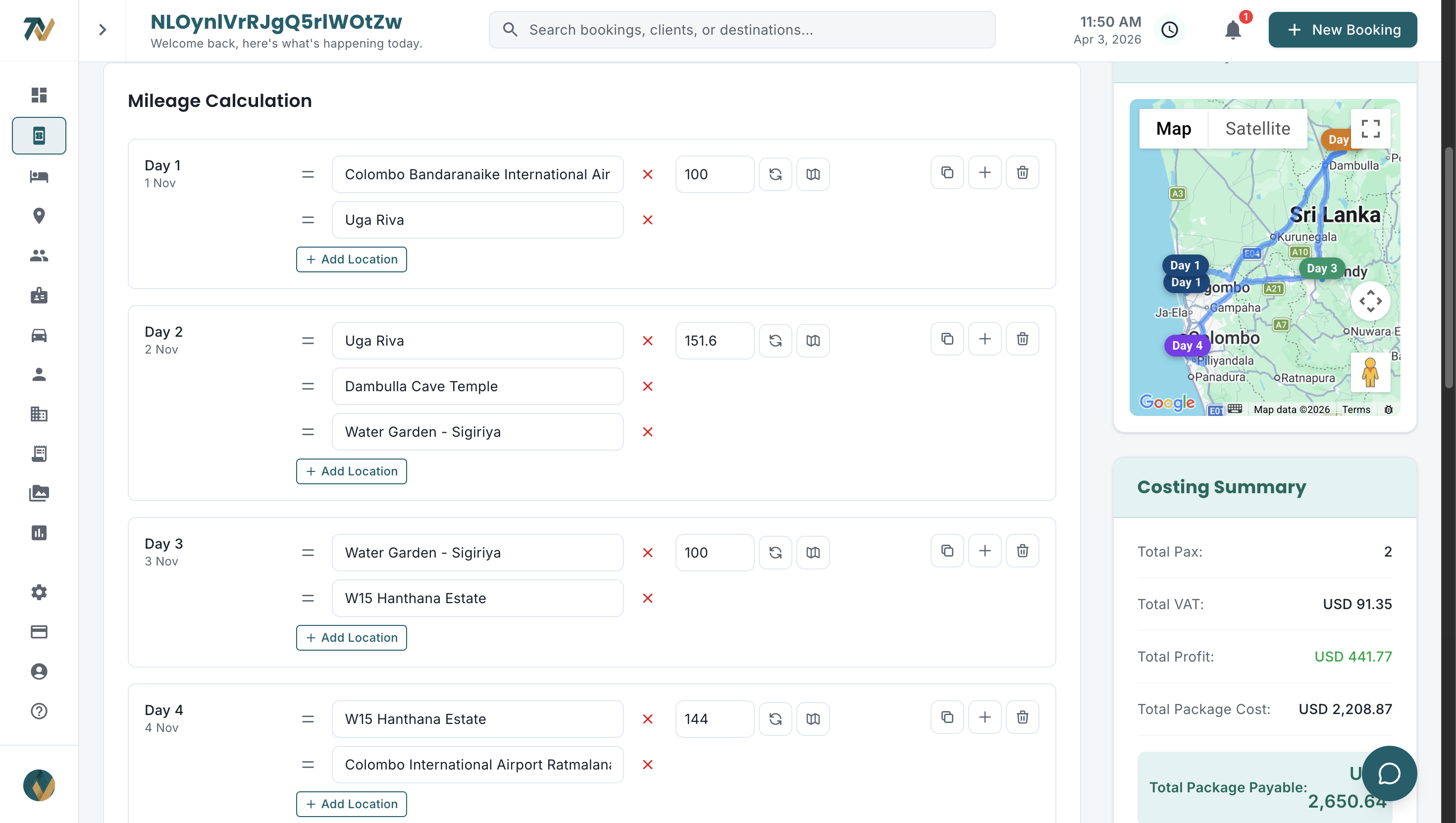
Tour Settlement and Profit Tracking for Sri Lankan DMCs
You quoted a healthy margin on a 10-day tour, but once the supplier invoices arrived the earned margin was lower. Per-booking settlement shows exactly which cost line took the difference.
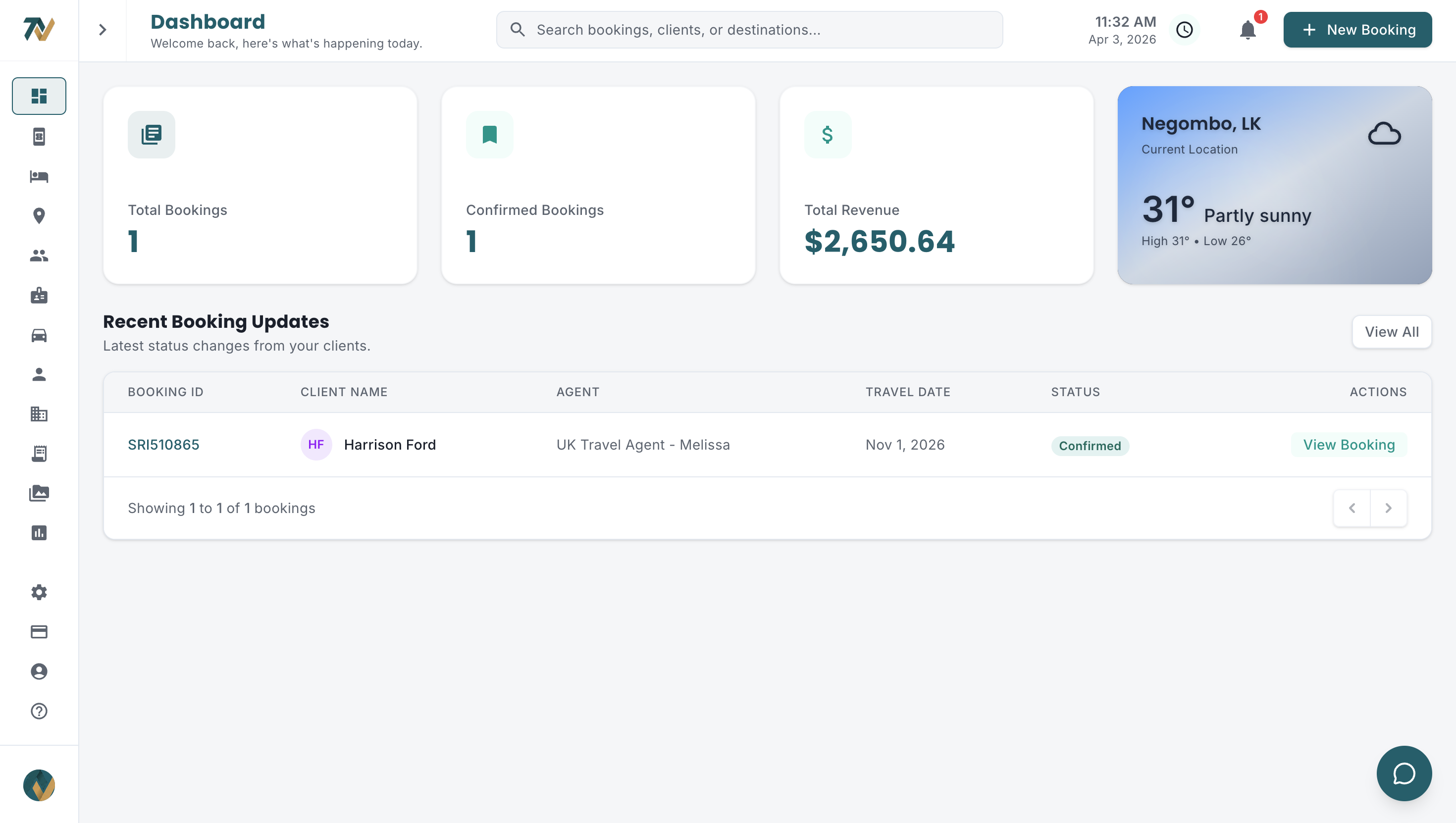
Tour Operator Reports and Analytics: Decide With Data
You know the business is doing "okay" but cannot say which tours earn the most, which agents convert best or whether margins are holding. Here is what a tour operator should measure and how reports replace gut feel.