
Supplier Voucher Management: A Guide for Sri Lankan DMCs
A forgotten safari confirmation or an unconfirmed whale-watching trip costs a Sri Lankan DMC money and agent trust. Here is how to manage supplier vouchers from creation to payment.
Travify Team
Travel Operations Experts · April 13, 2026 · Updated October 6, 2026
In short: Supplier voucher management is the process of confirming every non-hotel service on a tour (safari jeeps, whale-watching boats, cooking classes, guides, restaurants) with the supplier in writing before the guest arrives. Sri Lankan DMCs (destination management companies) do it well by keeping one supplier database, generating each voucher from the booking, recording every send, separating sent from confirmed, and linking delivered services to supplier payments.
Hotels get most of the attention in voucher management, and rightly so: accommodation is the largest cost line and the most visible to guests. But a Sri Lankan DMC (destination management company, the inbound tour operator that runs the trip on the ground) coordinates far more suppliers than hotels.
Jeep operators in Yala, whale-watching boats in Mirissa, cooking classes in Kandy, restaurants, Ayurveda spas and cultural shows all need a written confirmation before the guest arrives. If your hotel process still needs work, start with hotel voucher management and come back to this guide.
Key takeaways
- A supplier voucher is the written confirmation a DMC sends to a non-hotel supplier (safari operator, boat company, guide, restaurant) stating the service, date, time and guest count.
- Sent is not confirmed: review every voucher sent more than 24 hours ago without a supplier reply, and follow up by phone.
- A central supplier database and an expense catalog remove re-typing and stop two designers quoting different prices for the same Yala safari.
- Every amendment or cancellation needs its own clearly marked voucher, or the supplier prepares for the wrong service and still bills you.
- Linking each delivered service to a supplier payable prevents both duplicate payments and forgotten invoices at settlement.
Why do supplier confirmations slip through at Sri Lankan DMCs?
Supplier confirmations slip because they are treated as less critical than hotel bookings and managed informally. A guest without a hotel room is an obvious crisis, so most DMCs run a disciplined hotel voucher process. An unconfirmed cooking class feels minor, so it gets a WhatsApp message, an email or a phone call that nobody documents.
That informal approach holds while volumes are small and collapses as they grow. As an illustration, a 7-day Sri Lanka tour might include 8 to 12 activities and services beyond accommodation, so 50 active bookings mean 400 to 600 individual supplier confirmations that all have to happen on time.
Lead times differ by supplier type. The windows below are typical working guidelines rather than supplier policies, so confirm each supplier’s own cut-off.
| Supplier type | Sri Lankan examples | Typical confirmation lead time | Risk if unconfirmed |
|---|---|---|---|
| Wildlife safari | Yala, Udawalawe, Minneriya jeep operators | 48–72 hours | High (limited jeep availability) |
| Water activities | Whale watching Mirissa, surfing Weligama, diving Trincomalee | 24–48 hours | Very high (weather-dependent, limited boats) |
| Cultural experiences | Cooking classes, village walks, temple visits | 24 hours | Medium |
| Adventure activities | White water rafting, zip lining, hot air balloon | 48–72 hours | High (equipment and staff scheduling) |
| Dining | Restaurant reservations, special dinners | 24 hours | Low to medium |
| Wellness | Ayurveda treatments, spa sessions | 24–48 hours | Medium |
What does a missed supplier confirmation actually cost?
A missed supplier confirmation costs a DMC in five ways: a higher walk-in rate, an expensive last-minute replacement, guest compensation, damage to the travel agent relationship and a public review. The total is underestimated because the costs are scattered across line items.
- Walk-in rate premium: a supplier with no voucher on file may charge the walk-in rate instead of your contracted rate, and for high-demand services such as a Yala safari the gap is significant.
- Emergency alternatives: when an activity is unavailable because it was never confirmed, the last-minute replacement is almost always more expensive and often inferior.
- Compensation: a guest who misses a promised whale-watching trip or cooking class expects something back. Free meals, upgrades or partial refunds come straight out of the margin.
- Agent relationship damage: when a travel agent’s client has a bad experience caused by your operational failure, the agent remembers and starts testing your competitors.
- Negative reviews: a single missed activity can become a public review that names your company.
Illustrative example: a forgotten whale-watching confirmation in the Mirissa season (roughly November to April) means a morning without a boat, a compensation payment and a strained relationship with the agent who sent the booking, all for a voucher that takes under a minute to send. The real cost of tour costing errors shows how small leaks like this add up across a season.
What should a supplier database include?
A supplier database should hold, for every supplier, the contact channels, the services and current prices, lead-time and cancellation rules, and payment terms. Most DMCs have it scattered across email contacts, phone lists, old quotations and personal notebooks; centralising it is the foundation for everything else.
A useful supplier record includes:
- Supplier name and company details
- Primary and secondary contacts (email, phone, WhatsApp)
- Service categories (wildlife, water sports, cultural, adventure, dining, wellness)
- Specific services offered with current pricing
- Location and operating area
- Cancellation policy and lead-time requirements
- Payment terms (advance, on arrival, after the service)
- Quality notes and guest feedback history
Once this data is in one place, creating a voucher is a matter of selecting the supplier and the service; contact details, pricing and terms come with them.
Sri Lankan activity suppliers typically revise rates once a year, usually ahead of the December to March peak. Block out two weeks in October or November to contact every active supplier, confirm current rates and update the database. It prevents quoting stale prices; handling peak-season chaos covers the rest of that preparation.
What does a good supplier voucher workflow look like?
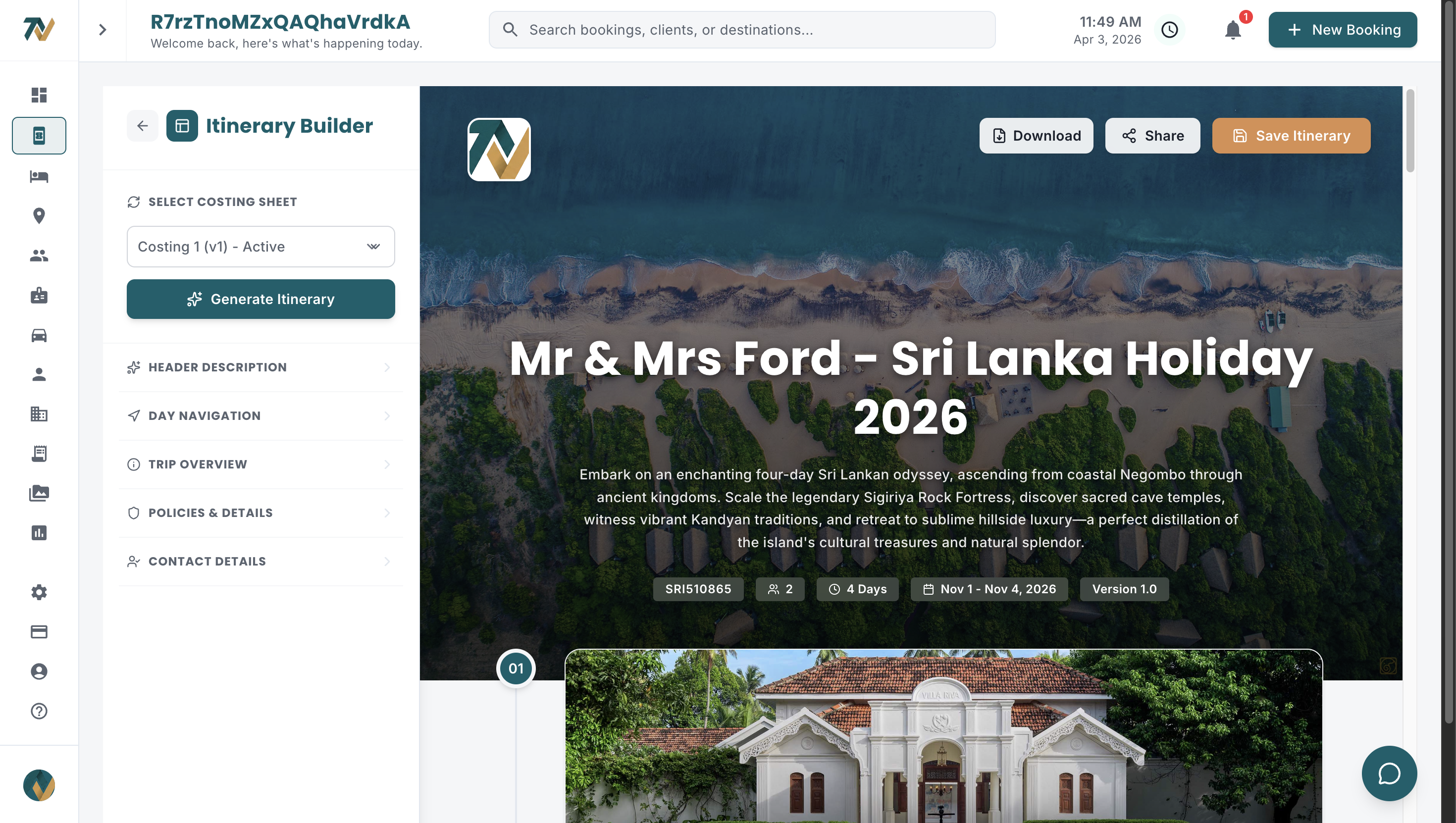
A good supplier voucher workflow has five stages, each with a named owner and a recorded timestamp: create the voucher, assign the supplier, review and send, track the confirmation, and handle amendments or cancellations.
- Voucher creation: when an activity is added to a booking, directly or from the expense catalog, create the voucher with the service description, date, time, number of guests and special requirements.
- Supplier assignment: link the voucher to the correct supplier so their contact details and pricing carry over from the database.
- Review and send: the operations team checks the voucher for accuracy and emails it to the supplier. The send is recorded with a timestamp and recipient.
- Confirmation tracking: mark the voucher confirmed when the supplier replies, and flag anything still unconfirmed for follow-up.
- Amendments and cancellations: if the booking changes, issue an amended voucher or a cancellation voucher so the supplier always holds the current version.
How should amendments and cancellations reach the supplier?
Every change to a confirmed service needs its own voucher, clearly marked as an amendment or a cancellation and referencing the original. Itineraries change constantly: guests swap one activity for another, weather forces a reschedule, an agent adds two more guests. Failing to communicate the change costs as much as failing to send the original confirmation.
Without amendment tracking you get the classic mismatch: the guest expects activity A while the supplier is prepared for activity B, because the change was agreed verbally and one side forgot. Worse, a cancelled activity is still being held, and billed, because the supplier was never told.
How does an expense catalog keep supplier pricing consistent?
An expense catalog is a pre-built library of the services you commonly include in tour packages, each with its description, supplier and cost, so every costing picks the same item instead of re-typing it from memory. It speeds up costing and itinerary building and stops one designer quoting a different price from a colleague for the same service.
The table below is illustrative; your own catalog would carry your contracted suppliers and rates.
| Catalog item | Supplier (example) | Cost per person (example) | Category |
|---|---|---|---|
| Yala National Park morning safari (half day) | Contracted jeep operator, Yala | $65 | Wildlife |
| Udawalawe elephant safari (half day) | Contracted jeep operator, Udawalawe | $55 | Wildlife |
| Mirissa whale watching | Licensed boat operator, Mirissa | $50 | Water activities |
| Sigiriya Rock Fortress entrance | Government ticket (no supplier) | $30 | Cultural |
| Kandy cooking class | Home-cooking host, Kandy | $35 | Cultural |
| Ella zip line | Adventure operator, Ella | $40 | Adventure |
| Galle Fort guided walking tour | Local heritage guide, Galle | $25 | Cultural |
Sent is not confirmed: how do you track supplier voucher status?
Track sent and confirmed as two separate states, and review every voucher sent more than 24 hours ago with no supplier reply. Sending a voucher is not the same as holding a confirmed service, yet many DMCs treat them as equivalent: the safari operator gets an email, the task is mentally ticked off, and nobody notices the reply never came.
The email may have gone to spam. The operator may be full on that date. You find out when the guest arrives at the park gate. A short daily check of unconfirmed vouchers catches these problems while they are still cheap to fix.
If a supplier has not confirmed within 24 hours of receiving a voucher, phone them rather than waiting for an email reply. During the December to March peak, suppliers are stretched too, and a two-minute call resolves what would otherwise become a forgotten confirmation.
What daily habits keep supplier confirmations from slipping?
Software records the status; the team has to act on it. Treat supplier confirmations with the same seriousness as hotel confirmations by building them into the daily routine:
- Put supplier confirmation on the daily operations checklist.
- Assign clear ownership: one person is responsible for every voucher on a booking being sent and confirmed.
- Include confirmation status in booking reviews and in handovers between team members.
- Track supplier reliability: a supplier who regularly fails to confirm or under-delivers should lose priority in future sourcing.
- Check in with key suppliers before peak season so capacity surprises are found in October, not December.
Suppliers notice when a DMC is organised. Clear, timely vouchers and prompt payment tend to earn priority on busy dates.
How do supplier vouchers connect to supplier payments?
Each supplier voucher should turn into a supplier payable (an amount you owe for a delivered service) so that paying suppliers follows the same record as confirming them. Knowing which suppliers are paid, pending or disputed matters for cash flow and for the relationship: a boat operator paid a month late in peak season remembers it when you need a last-minute seat.
Linking vouchers to payments creates a clean audit trail: a Yala safari shows as confirmed, delivered and paid, or as still unpaid after 30 days. That visibility prevents duplicate payments and forgotten obligations, both common when payments live in a separate spreadsheet, and it feeds settlement and profit tracking for each completed tour.
How does Travify handle supplier vouchers?
Travify generates supplier vouchers from the activities and expenses already on the booking, emails them from your own connected Gmail or Outlook, records every send, and creates the Finance payable when the voucher goes out. In practice:
- Vouchers come from the booking: service, dates, duration and guest counts are laid out in dedicated fields, with rich-text notes for the specifics (bold text, bullet lists and line breaks carry into the email and the PDF), so nothing is re-typed from the costing or the expense catalog.
- Suppliers live in one directory: the voucher recipient pre-fills from the supplier’s saved contact emails, and the supplier list itself can be imported from a spreadsheet, PDF or image for review.
- Every send is recorded: the email history (every send with date and time, who sent it, the inbox it went from, the subject and every To, Cc and Bcc address) stays on the voucher, a voucher that has already been emailed cannot be deleted, and new, amended and cancelled vouchers keep the team and the supplier aligned.
- Reminders cover the gap: a daily reminder lists hotel and supplier vouchers still unsent close to a tour start, and a "Supplier Voucher Sent" notification fires on each successful send. A sent voucher carries a Confirmed tick, an Awaiting filter shows every sent voucher with no confirmation yet, and if one stays unconfirmed past the configurable threshold (3 days by default) a daily "Supplier Vouchers Awaiting Confirmation" reminder fires until the tick is added.
- Finance follows automatically: sending a supplier voucher creates a payable in LKR, and marking the booking Completed opens a settlement that compares quoted costs with actual payments.
- Procurement sees the pattern: Supplier Performance summarises the last 12 months of vouchers (confirmation rate, average days to confirm, cancellation waivers, spend) and flags suppliers with missing payment terms.
Hotel vouchers follow the same pattern (confirmation tick, unconfirmed-voucher reminders, cancellation deadlines), so the whole supplier side of a booking lives in one place. See how the departments fit together or compare plans and pricing; every plan starts with a free trial.
Never miss another supplier confirmation
Travify tracks every supplier voucher from creation to send to payment, with supplier details pre-filled, send history recorded and amendments handled as their own vouchers. Start your free trial and run the next peak season without a forgotten confirmation.
Start your free trialarrow_forwardFrequently asked questions
Ready to Streamline Your Operations?
Join Sri Lankan travel companies already saving hours every week with Travify.
Related Articles
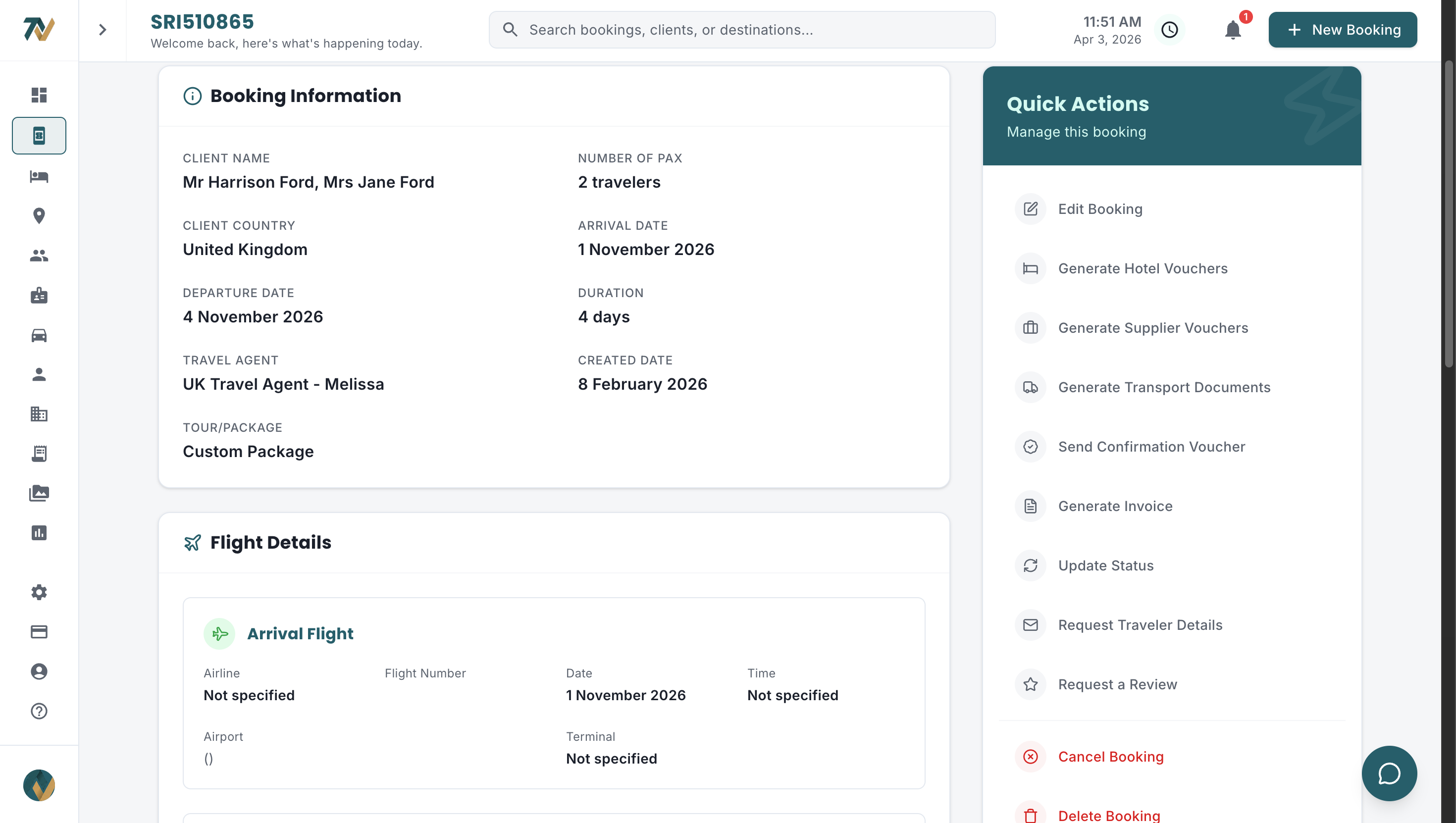
Hotel Voucher Management for DMCs: From Chaos to One Click
Hotel vouchers are the workhorses of tour operations. When they are wrong, late or missing, the cost ranges from embarrassing to expensive. Here is how Sri Lankan DMCs fix the voucher process.
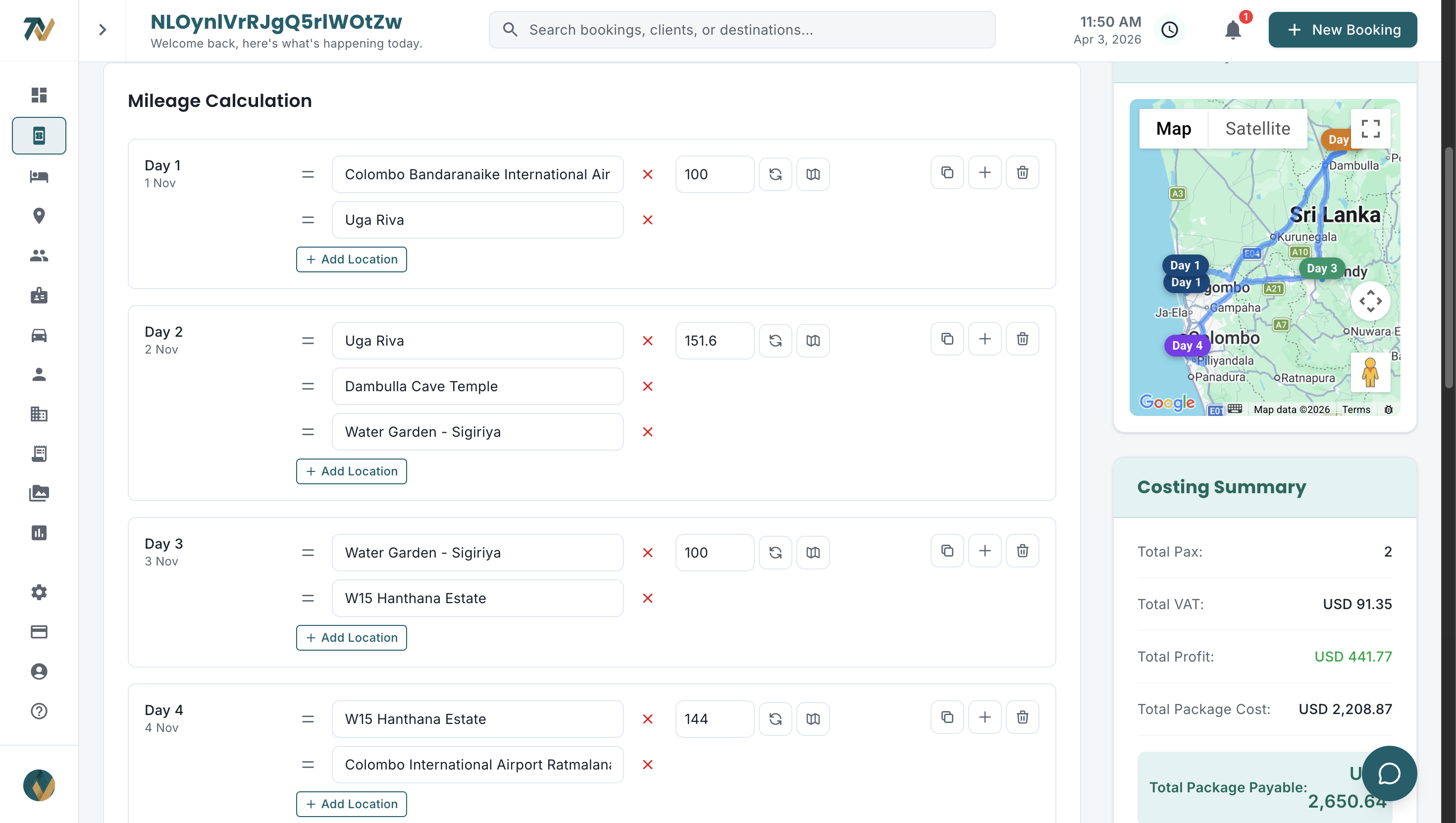
Tour Settlement and Profit Tracking for Sri Lankan DMCs
You quoted a healthy margin on a 10-day tour, but once the supplier invoices arrived the earned margin was lower. Per-booking settlement shows exactly which cost line took the difference.
Peak Season Booking Management: A Guide for Sri Lankan DMCs
Sri Lanka’s December to March peak can double or triple a DMC’s live bookings with the same team. Here is how to run a status workflow, quote faster and keep vouchers moving without burning out.